

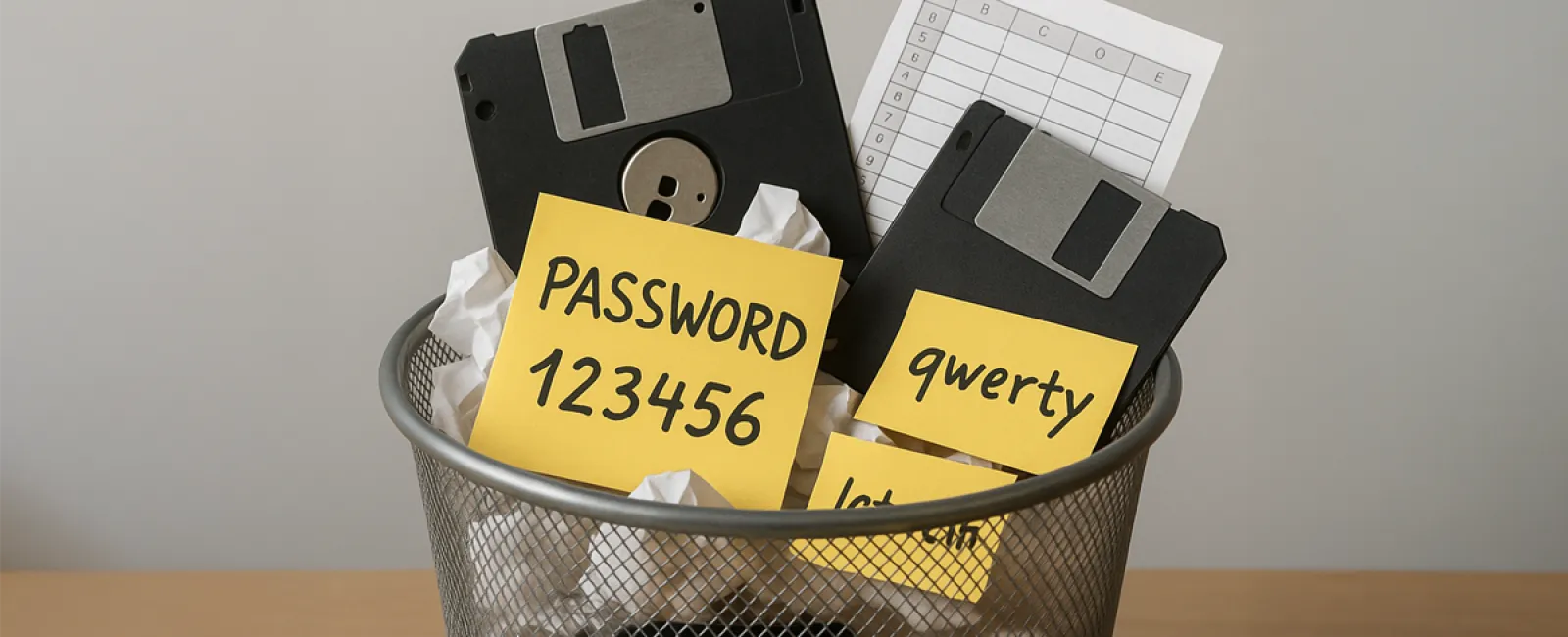
Right now, millions are embracing Dry January.
They're giving up something they know holds them back, aiming to boost their health, focus, and productivity, and finally ending the endless cycle of "I'll start Monday."
Your business has its own version of Dry January, filled with tech habits instead of drinks.
These are the routines everyone knows are risky or inefficient, yet continue because it feels "fine" or "we're too busy."
Until suddenly, it's not.
Here are six destructive tech habits to ditch immediately, along with smart alternatives that enhance your operations.
Habit #1: Postponing Software Updates
Clicking "Remind Me Later" on updates has done more harm to small businesses than hackers themselves.
We get it—no one wants unexpected restarts during work hours. Yet these updates don't just add features; they seal security gaps hackers are ready to exploit.
Delaying "later" turns into weeks, then months—leaving you vulnerable with outdated, unsafe software.
Remember the global WannaCry ransomware disaster? It thrived on a vulnerability patched months earlier, but businesses ignored updates and got hit hard.
The fallout? Billions lost as businesses ground to a halt across over 150 countries.
Break the habit: Schedule updates for end-of-day or let your IT team deploy them quietly in the background—no interruptions, no security risks.
Habit #2: Using One Password Everywhere
That go-to password you rely on for everything—from email to banking—is a ticking time bomb.
Data breaches happen daily. That forgotten industry forum from years ago? Its leaked database now hands hackers your credentials on a silver platter.
Hackers don't guess your banking password; they already have it and try it across multiple sites.
This dangerous practice, credential stuffing, is behind many serious account takeovers.
Quit it: Adopt a password manager like LastPass, 1Password, or Bitwarden. You only memorize one master password; the app crafts complex, unique passwords for every account. Just minutes to set up. Lifelong peace of mind.
Habit #3: Sharing Passwords via Text or Email
Sharing passwords over Slack, text, or email might solve the immediate problem, but it leaves a dangerous, permanent digital trail.
Every message lingers—in inboxes, backups, and cloud archives—ready for discovery if any account gets compromised.
It's like mailing your house keys openly in a postcard.
Quit it: Use password managers with secure sharing features. Recipients get access without seeing the password, and access can be revoked anytime. If you must share manually, split credentials across channels and update passwords immediately after.
Habit #4: Granting Everyone Admin Rights for Convenience
It may seem easier to grant admin access to anyone who needs to install software or change settings, but this shortcut is dangerous.
Admin rights allow full control—installing software, disabling security, deleting files—and if hijacked, attackers gain these powers too.
Ransomware especially targets admin accounts for maximum damage.
Quit it: Follow the principle of least privilege. Give team members only the access they absolutely need. Setting proper permissions takes a bit more effort but safeguards you from costly breaches and accidental data loss.
Habit #5: Permanent "Temporary" Workarounds
Workarounds often start as quick fixes but become ingrained practices that slow everyone down.
Relying on these fragile solutions means productivity slips and dependencies on tribal knowledge grow. When systems change, these hacks break down, and no one knows how to fix them properly.
Quit it: Compile a list of all your team's workarounds. Don't try to patch them yourself. Instead, collaborate with experts who can implement solid, lasting fixes to save your team time and frustration.
Habit #6: Letting a Complex Spreadsheet Run Your Business
That sprawling Excel file with countless tabs and cryptic formulas might seem irreplaceable—but it's a huge risk.
What if it corrupts? What if the key operator leaves? Spreadsheets lack audit trails, proper backups, and scalability, making them fragile foundations for your business operations.
Quit it: Document what the spreadsheet actually manages, then explore specialized software—CRMs, inventory systems, scheduling tools—that bring security, backups, permissions, and growth potential.
Why It's So Hard to Break These Habits
You already understand these habits are risky, but busyness keeps them alive.
- Consequences stay hidden until disaster strikes—until your password reuse suddenly leads to a breach.
- The right approach feels slower upfront—setting up password managers takes time, while typing a familiar password seems quicker.
- Everyone else is doing it too, normalizing the risk and making the danger seem invisible.
Dry January works by forcing awareness and breaking autopilot. It's about seeing what was hidden.
How to Quit Tech Habits Effectively (Without Relying on Willpower)
Stopping bad habits isn't about discipline alone; it's about changing your environment to make good choices easier.
- Company-wide password managers lock out unsafe sharing.
- Automatic updates remove the "remind me later" temptation.
- Centralized permission management prevents reckless admin access.
- Permanent solutions replace fragile workarounds.
- Business-critical data migrates from spreadsheets to robust platforms with backups and controls.
By building systems that guide the right behavior, quitting bad tech habits becomes effortless.
That's the value a trusted IT partner brings—not just advice, but real operational change.
Ready to Eliminate the Tech Habits Holding Your Business Back?
Schedule a Bad Habit Audit today.
In just 15 minutes, we'll explore your business challenges and craft a clear roadmap to streamline your systems for lasting success.
No judgment. No jargon. Just a smoother, safer, and more profitable 2026.
Click here or give us a call at 609-676-3597 to book your 15-Minute Discovery Call.
Certain habits deserve to be quit cold turkey—and now's the perfect time.
Start your transformation this January.